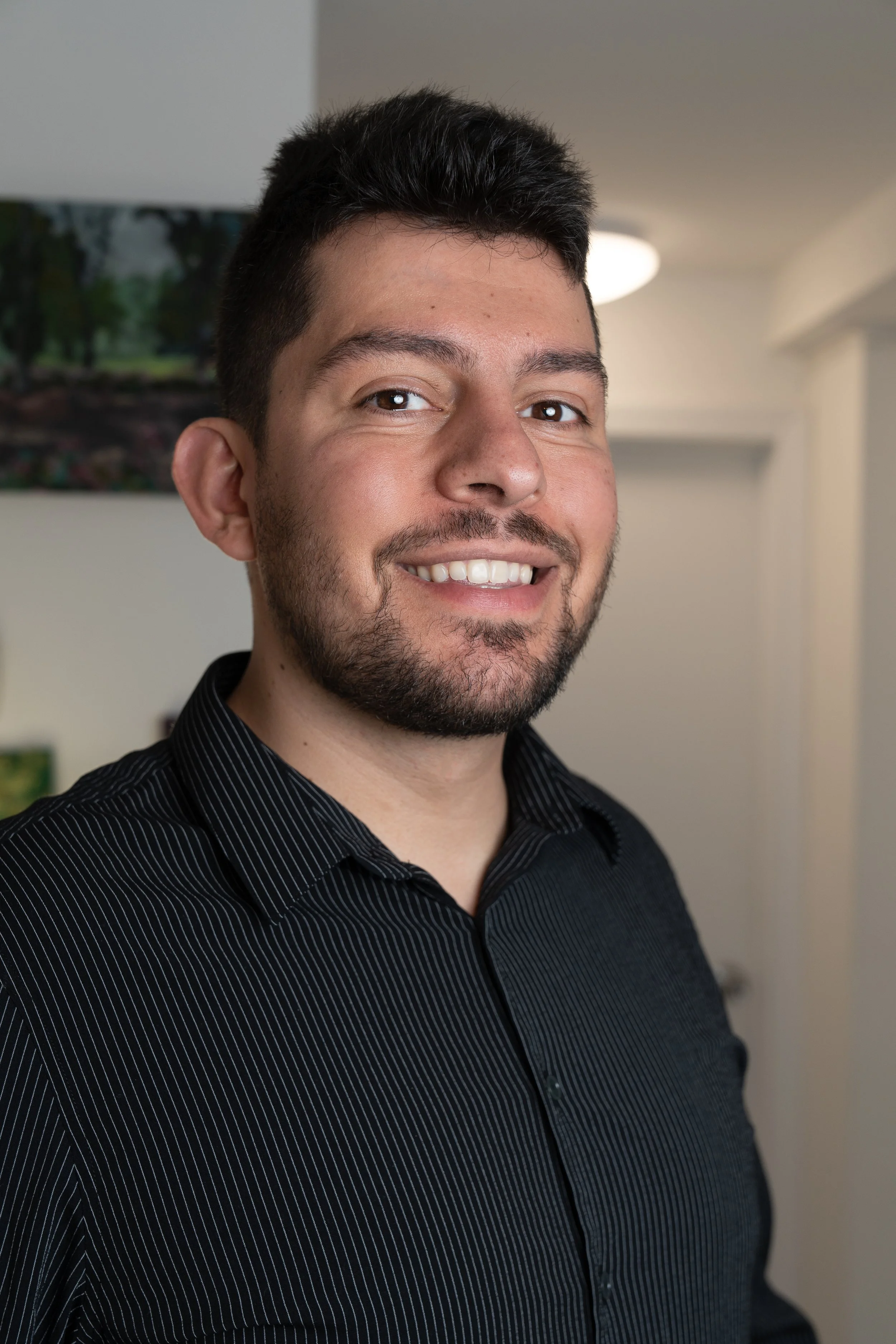
Sophocles Plokamakis
Artist, illustrator, storyteller, curator, teacher, father. There are a lot of ways to describe Sophocles, but no single title really captures who he is.
I met Sophocles when I was trying to find my way into the art show world. I started searching around on social media and came across a page on Instagram called Start Shows. It’s an independent exhibition platform that he curates and hosts, usually held at One Art Space in TriBeCa. At that time, I didn’t really know what I was getting myself into, but with his guidance I was able to prepare myself for that first step into showing my work.
Sophocles has been interested in art since he was about two years old. His mother saved some of his early drawings. As he grew up, he was constantly absorbing inspiration from graphic novels, cartoons, video games, and anime. When it came time to choose a path for college, his family encouraged him to follow in his father’s footsteps and become a doctor. Instead, he decided to go his own way and enrolled at the School of Visual Arts to study Cartoon Design.
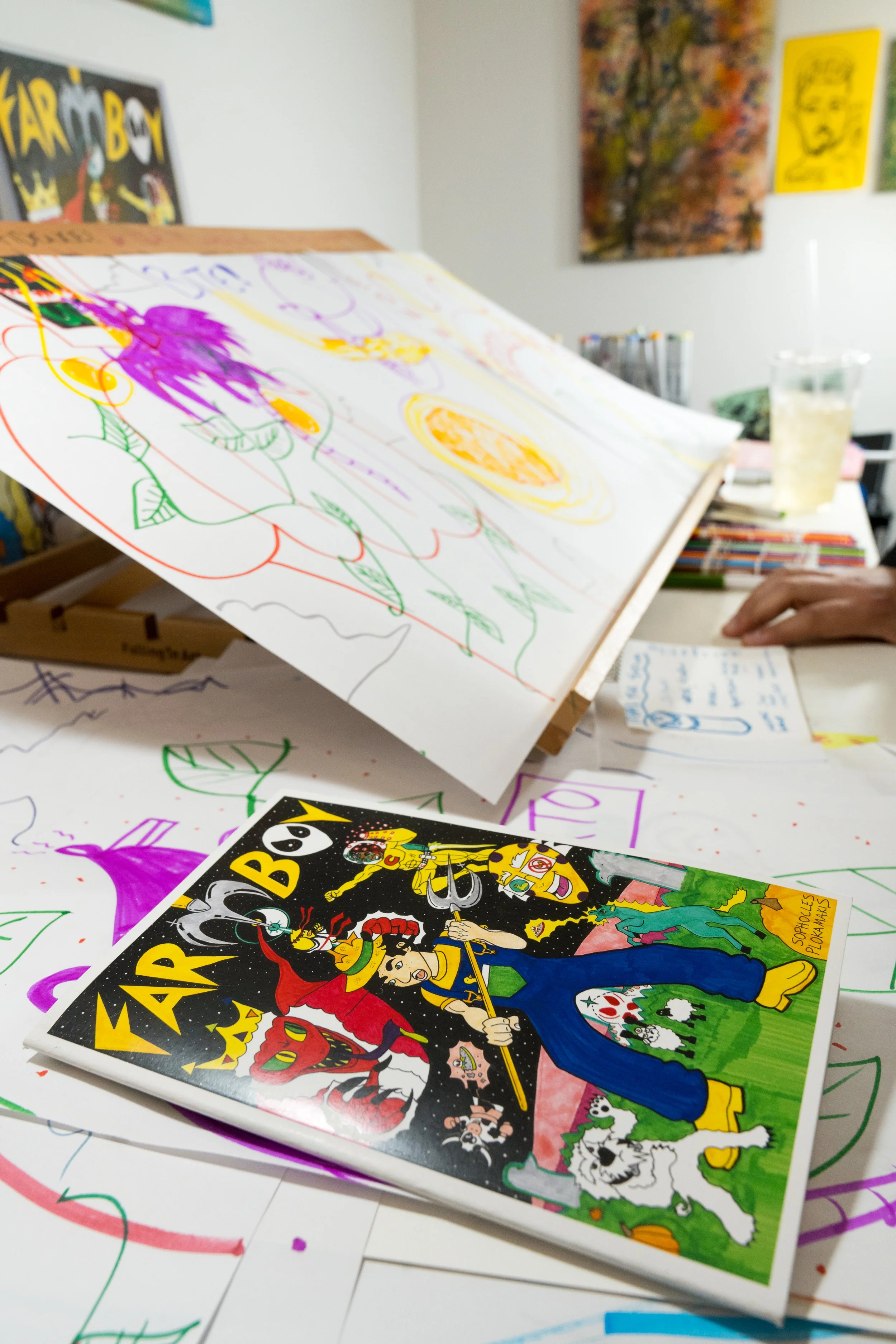
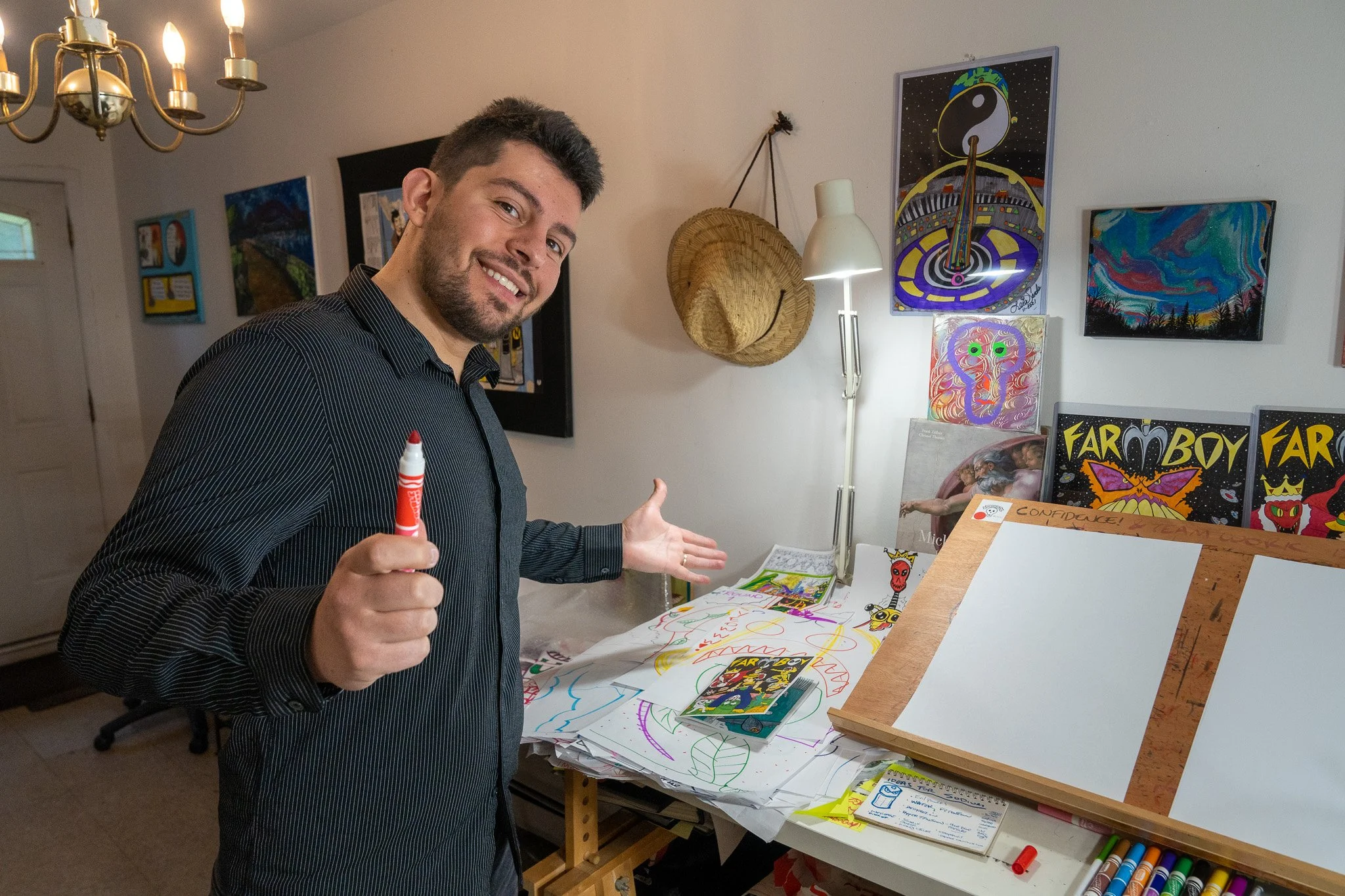
That decision led him deeper into developing his artistic voice. One of the projects he created there was a comic called Farm Boy, originally made for a class assignment. Over time, that assignment became something much larger, and he continues to expand the story today.
When I asked him about how he started doing art shows, he explained that he simply wanted to see his work displayed in a gallery setting. He went around New York searching for galleries and eventually made a connection with One Art Space, which allowed him to use the gallery for a show. The challenge, of course, was that renting the space was expensive and far larger than what one artist could reasonably fill alone. Instead of backing away from the opportunity, he decided to invite other artists to share the space.
That idea eventually grew into the art shows he organizes today. Beyond simply providing a space to exhibit work, he also helps artists prepare for the experience—creating personalized flyers for them, offering advice on how to present their work, how to talk to potential collectors, and how to navigate the gallery environment. His goal isn’t just to host a show, but to help artists gain knowledge they can carry into future opportunities.
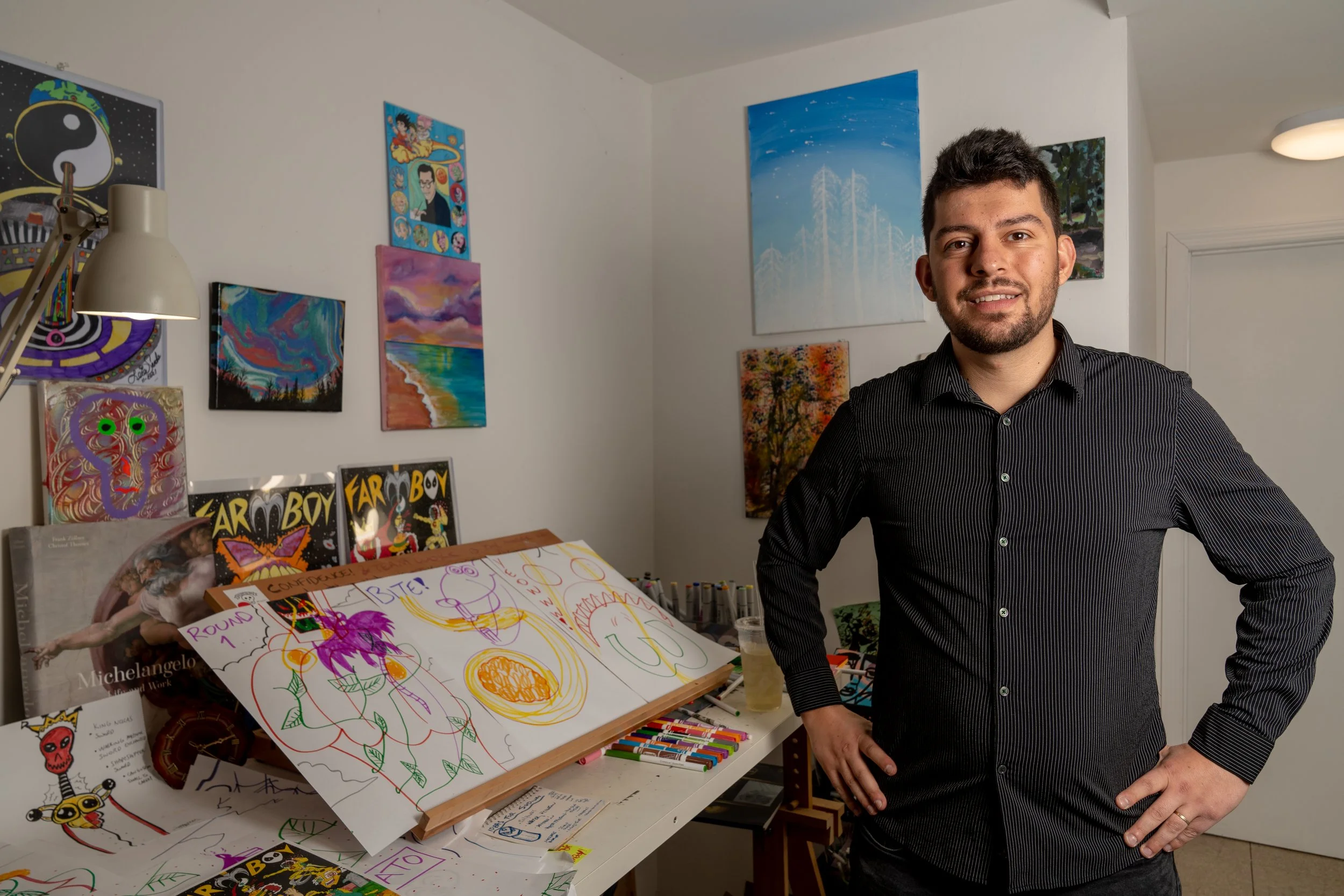
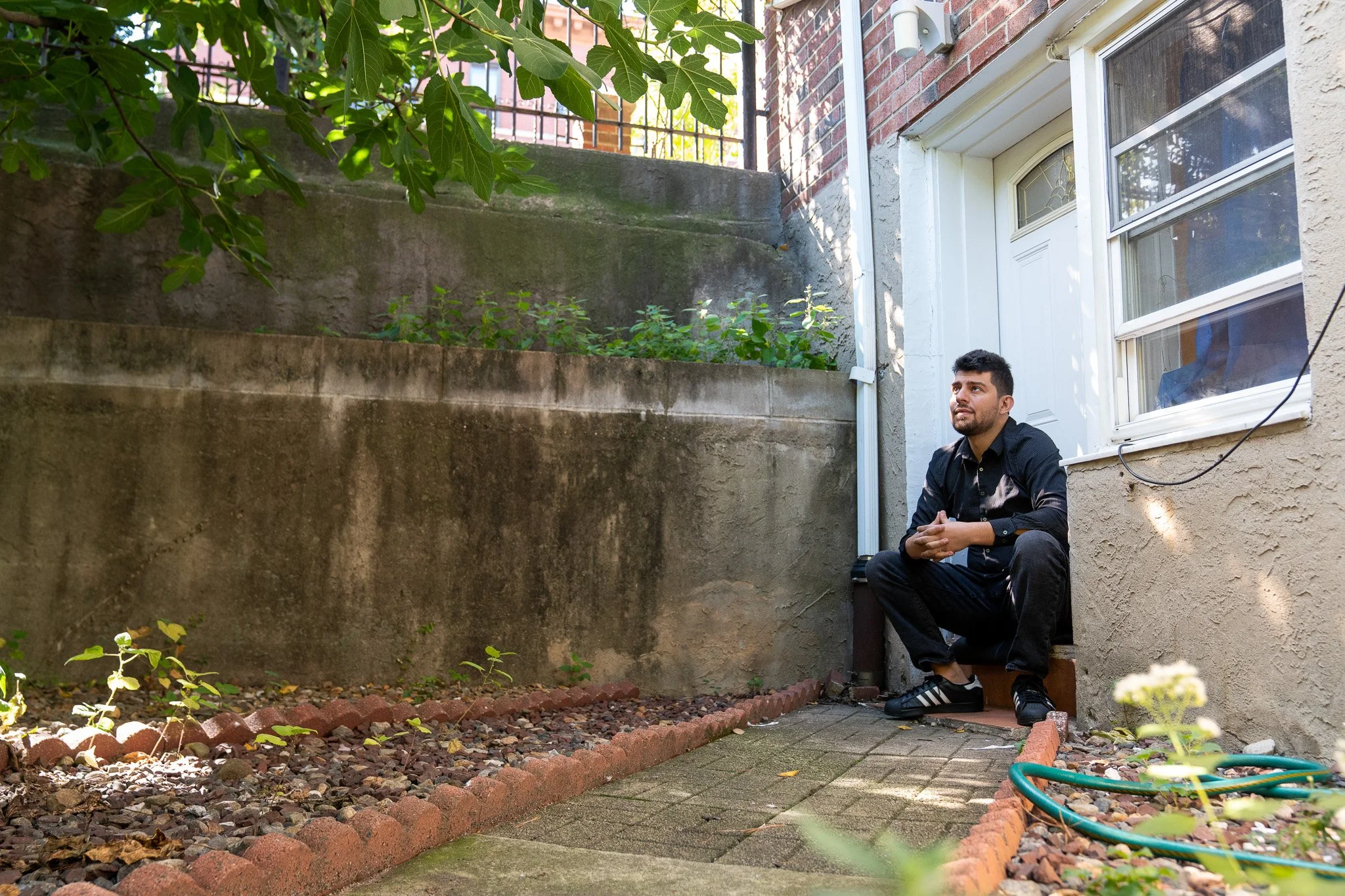
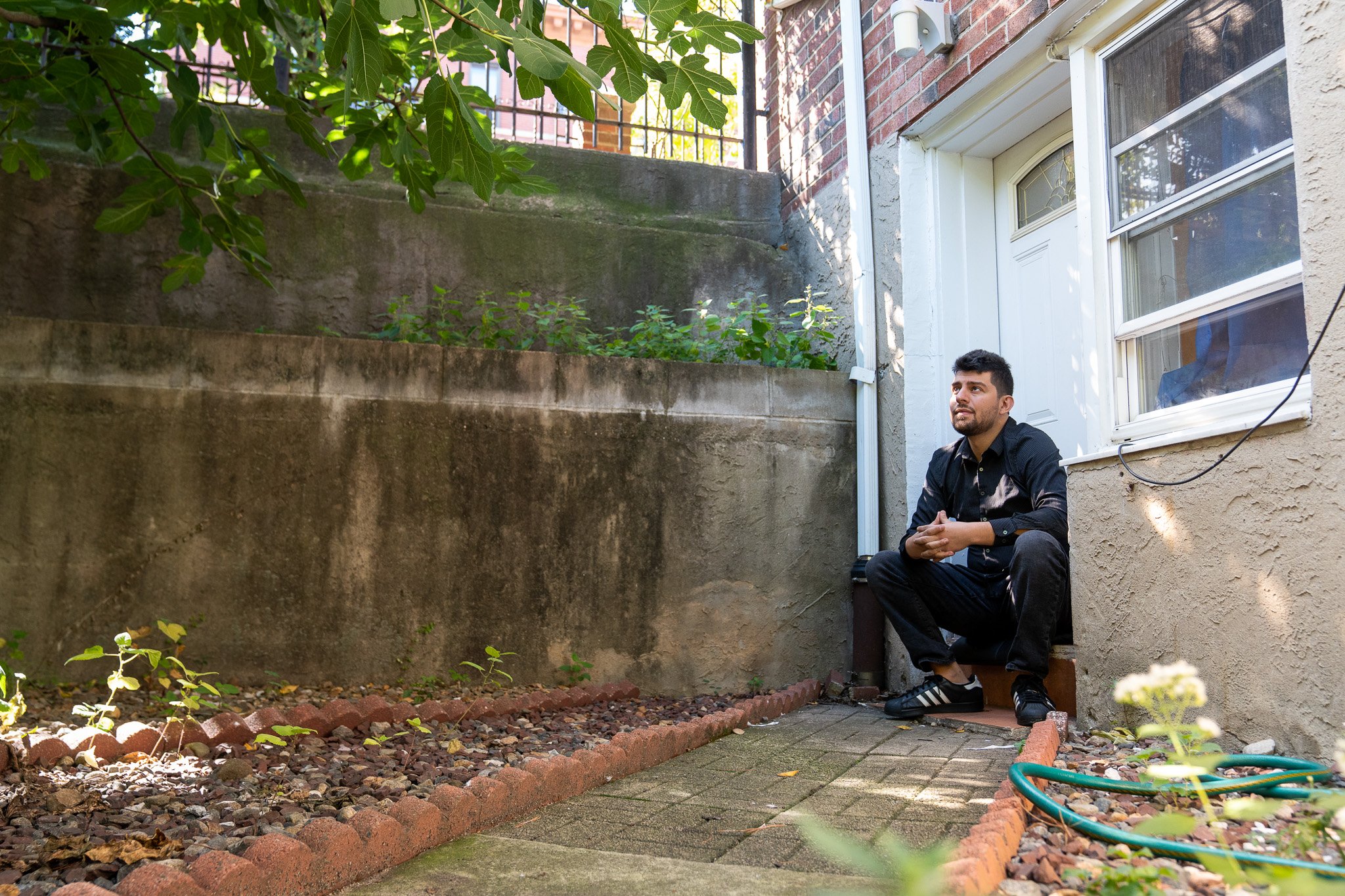
When I visited his studio in Astoria for a one-on-one photoshoot, I got to see another side of his creative process. Before entering the studio, you walk through a small stone garden with a fig tree and a rose bush. He told me he often sits on the stoop outside the door to clear his mind and absorb inspiration from that quiet little corner of nature.
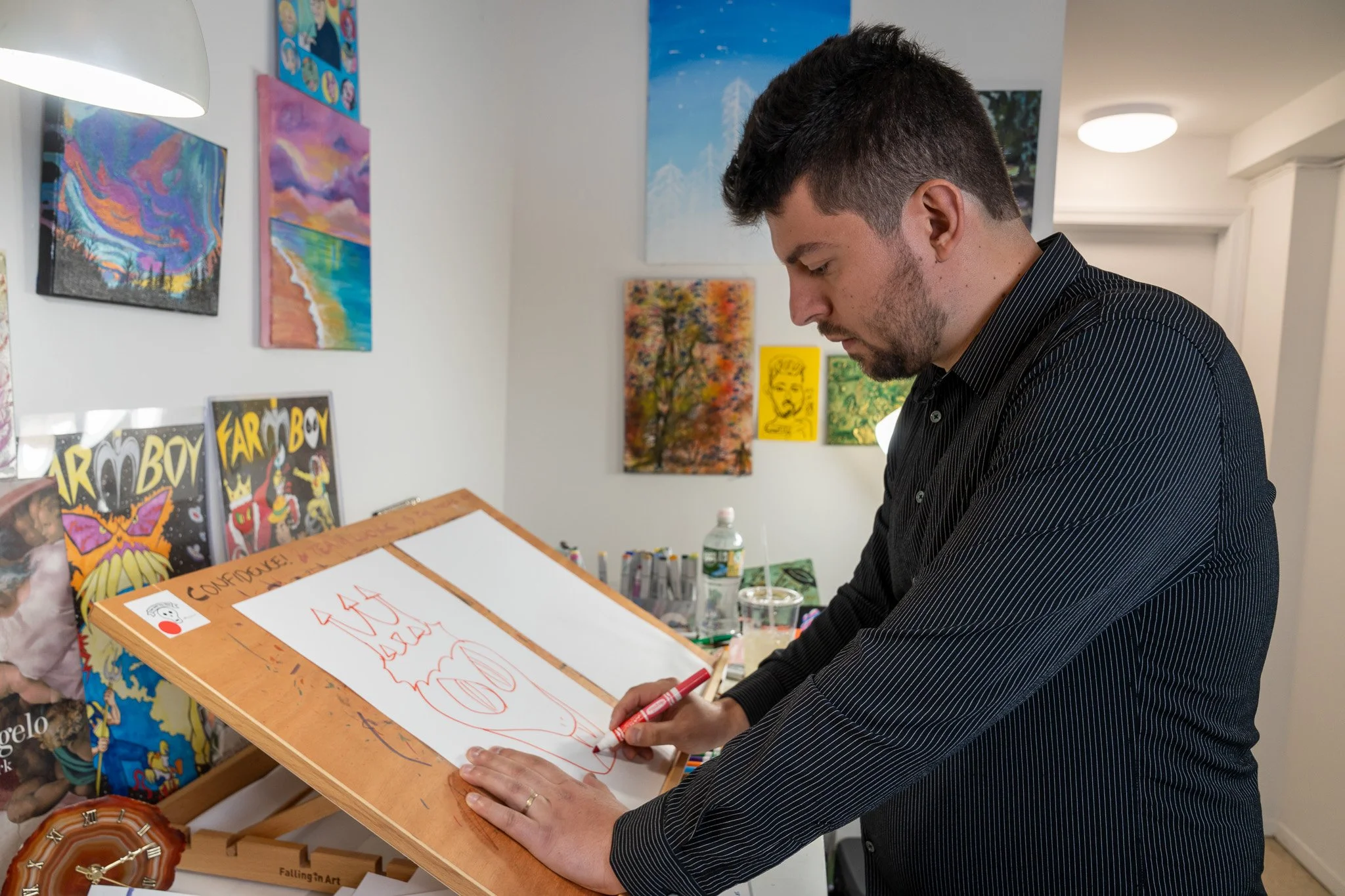
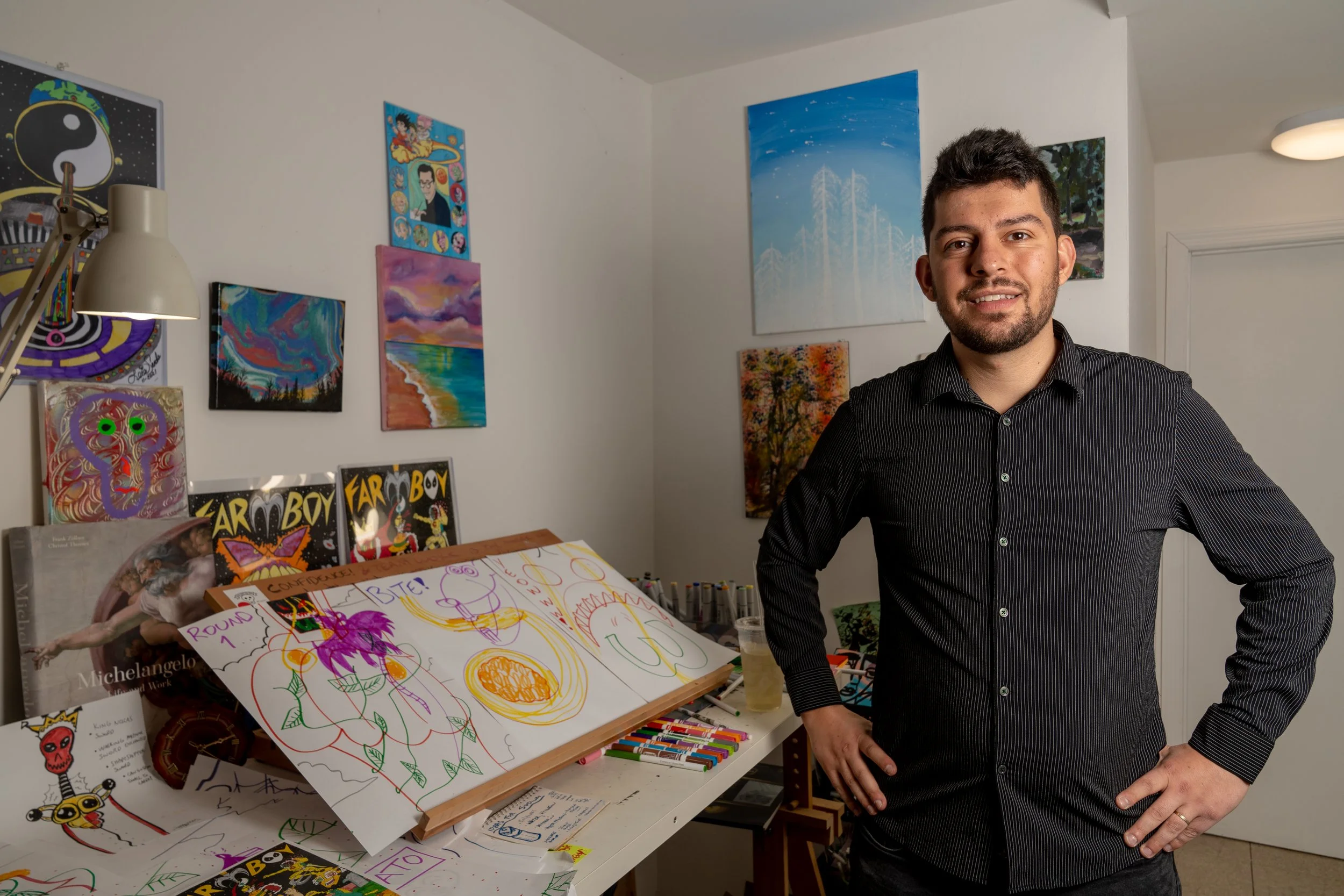
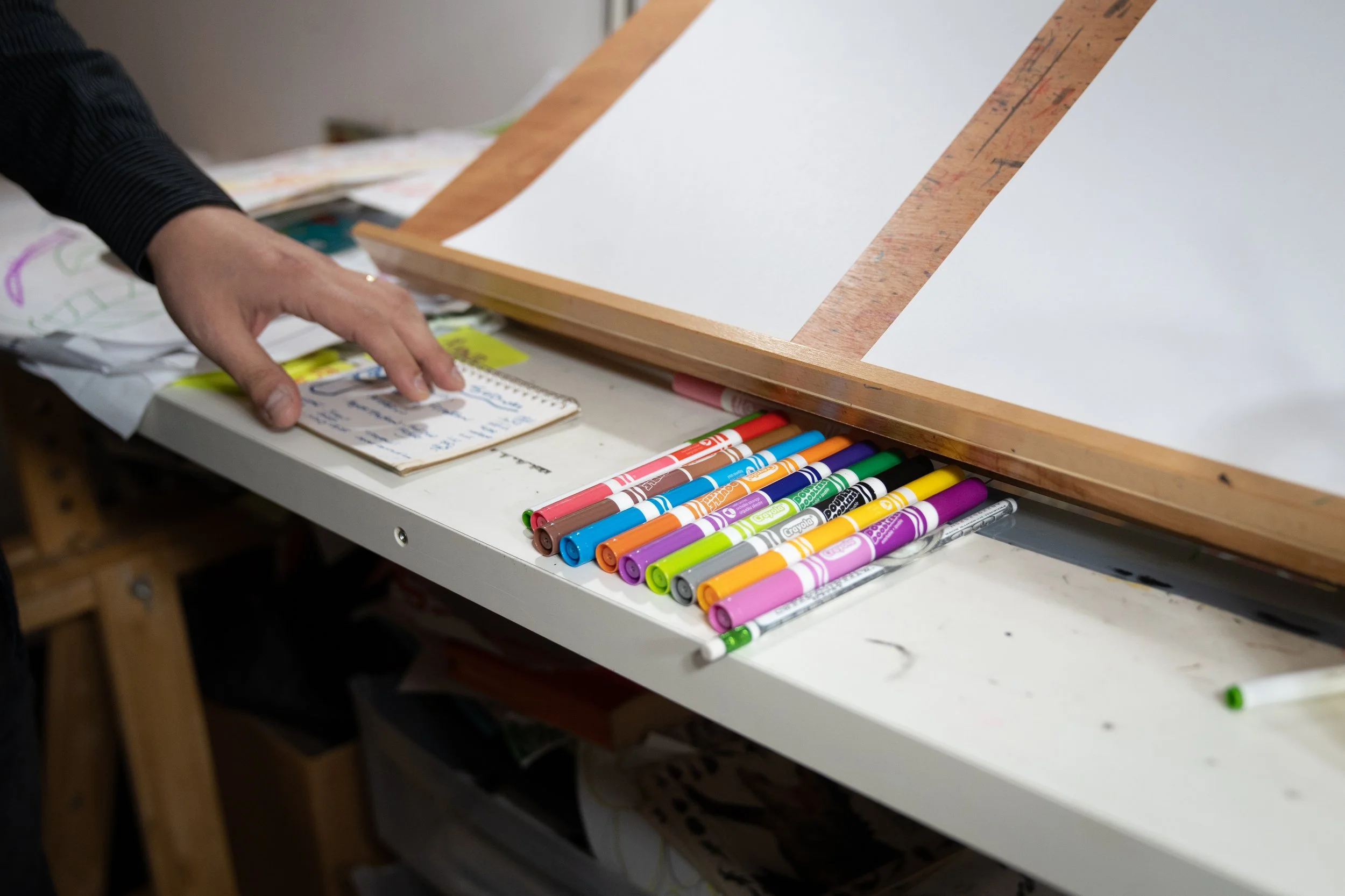
Inside, the studio is neatly organized. Shelves are filled with books ranging from music to manga to biographies. His drawing setup is arranged with intention—an easel in the center, stacks of previous sketches nearby, and a lightbox with markers on the other side. The lightbox allows him to trace and refine the final lines of his comic pages. Markers are his preferred medium because of the range of colors, tones, and saturation they offer.
Like many artists, he has his own way of getting into the right mindset before starting a piece. Before working on the next chapter of his comic, he takes a brief moment for prayer and then begins sketching. He prefers to keep his studio relatively private so he can work without distractions. He joked about how similar that is to the famous manga artist Osamu Tezuka, the creator of Astro Boy, who was known for not wanting to be disturbed while he was working because it would completely break his creative flow.
Of course, Sophocles is a bit more flexible with that rule. His family still visits the studio, and they remain an important part of his life.
Outside of the studio, our conversations drifted between anime, cartoons, baseball, and music. But underneath those casual topics is a clear sense of purpose. His family plays a central role in how he approaches both his work and his future. He hopes to expand the art shows he organizes to other locations and continue refining ways to help artists succeed.
At his core, Sophocles simply wants to see other artists thrive. The art world can be difficult to navigate, especially for people just starting out. Through his shows and his mentorship, he’s trying to shift that experience toward something more collaborative and supportive.
He’s building a culture where artists help each other grow, and where everyone has a chance to be seen